
This last week, I was invited to participate in an EcoFlight. EcoFlight is a nonprofit organization based in Colorado with a mission to educate and advocate for the protection of wildlands, wildlife habitat, watersheds, and culturally important landscapes using small aircraft. They have come to Idaho a few times, and this last week, I was able to take a trip over a portion of the Owyhee River Wilderness Area.

Funnily enough, Dr. Jen Pierce from Boise State University sat next to me through this flight. She has agreed to be on the podcast, but scheduling has been tricky so far. However, throughout the flight she was able to explain some of the geology, history, and ecology of the areas we flew over.
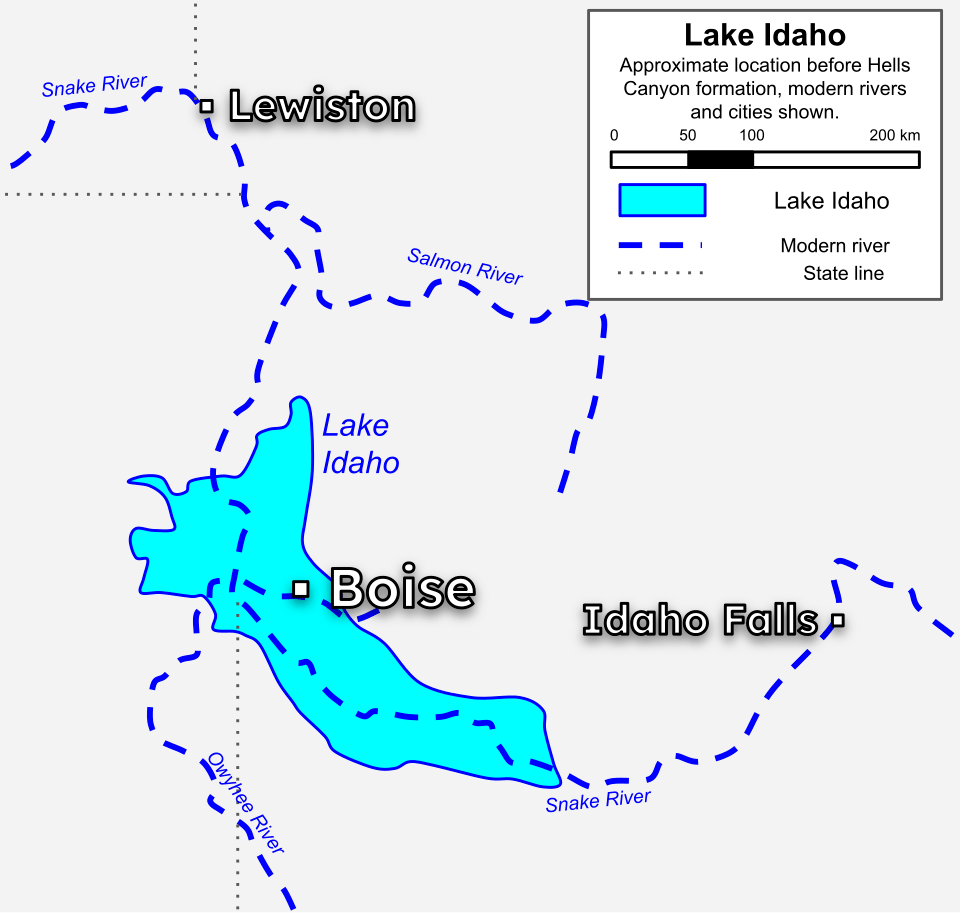
Dr. Pierce emphasized the unique history of the area; now a desert, Lake Idaho once filled the Snake River Plain. From 9 to 2 million years ago, this lake was 3,800 ft deep, 200 miles long, and 35 miles wide.1 Lake Idaho eventually burst, carving some of our deep canyons, like Hell’s Canyon, and leaving wide river canyons for the now narrow Snake River. It also left mineral sediments, and enriched the soil. This, combined with loess blown in, is what makes Idaho such a great spot for growing potatoes — who knew!
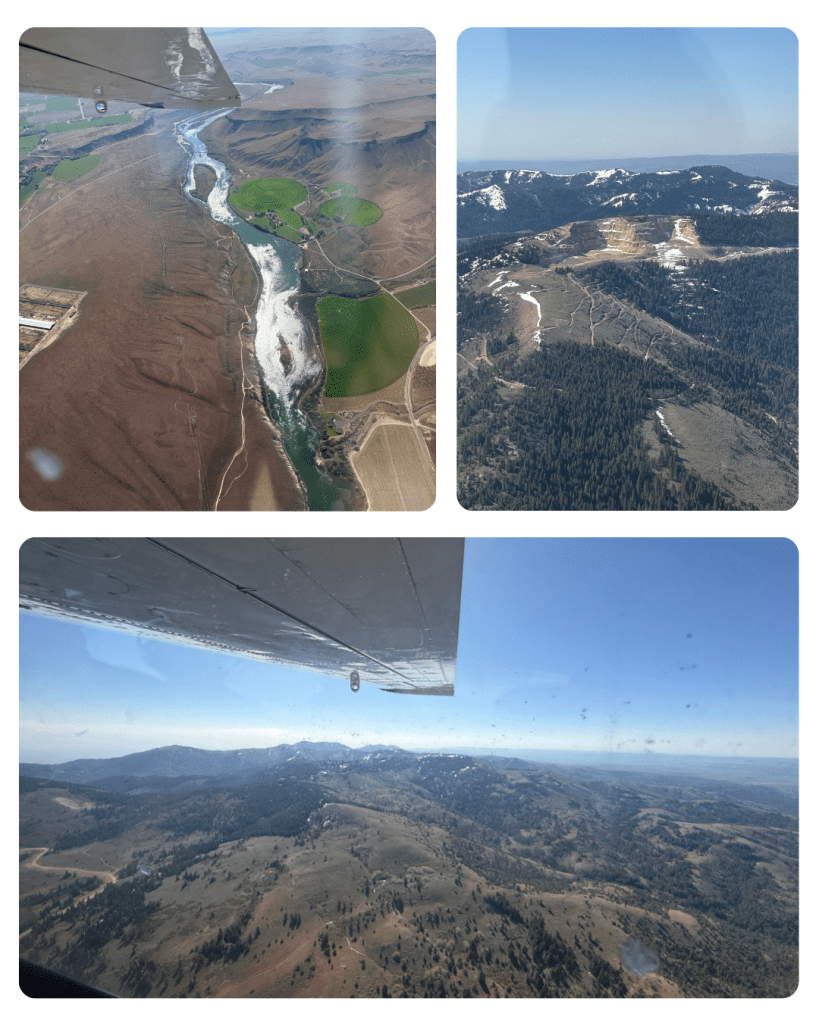
Importantly, one of the main reasons we were flying over the Owyhees was to check on juniper encroachment and treatment. One of my colleagues, John Robison, the Public Lands and Wildlife Director at the Idaho Conservation League, talked animatedly about why and how juniper was moving both north and up in elevation. While juniper is a native species, it is becoming a problem; choking out other native species, like sagebrush, grasses, forbs and flowers. Notably, it also is less edible, and many native species of animals can not eat it, unlike sagebrush.
Dr. Pierce also mentioned that when the BLM performs this widespread clear cutting of the juniper, as we were seeing occur, they will usually leave the juniper ‘skeletons’ and do not seed the area. When I asked if that would cause invasives like cheatgrass to come in, both Dr. Pierce and JR answered in the affirmative.
The reason that I’m choosing to write about this experience, other than it being super cool, is that I think it highlights how fragile this ecosystem is. As the climate changes, and human density increases, I can only assume that juniper will become the dominant and more prominent species within the Steppe. Unfortunately, juniper does not have the same adaptations that sagebrush has in order to feed the ecosystem.
More to come!

