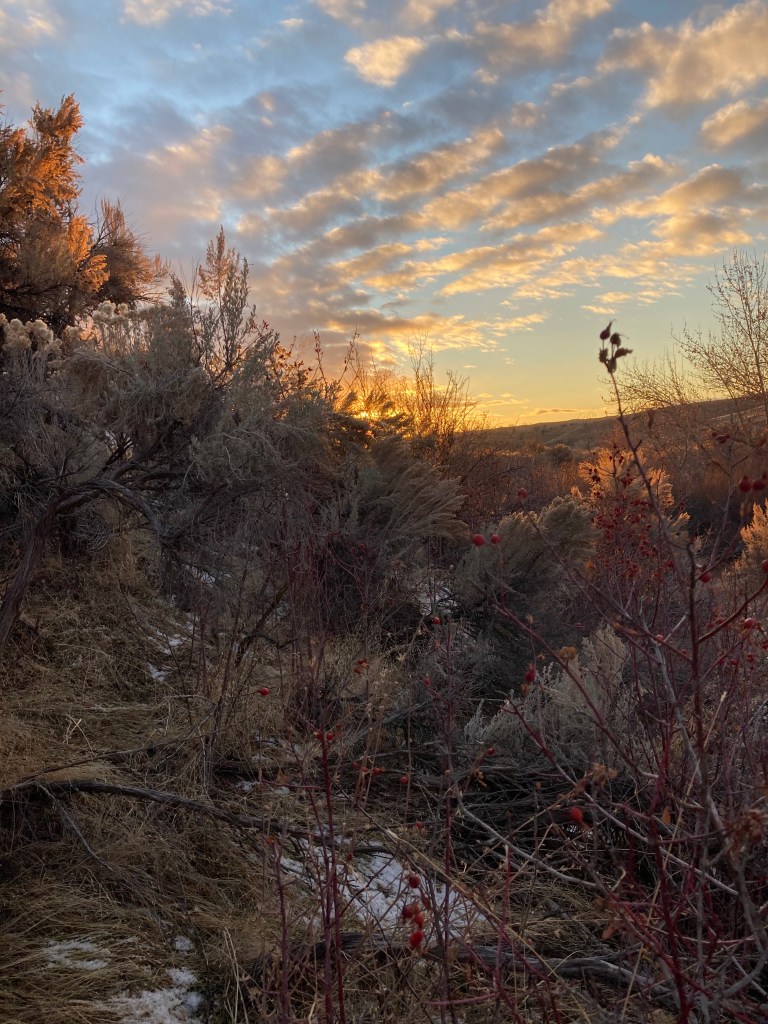
One could argue that my connection to this ecosystem is entirely due to my own memories of hiking across the rolling hills and breathing in the baking sagebrush scent. However, personal preferences aside, this ecosystem plays an important role for our planet, and for the western United States specifically.
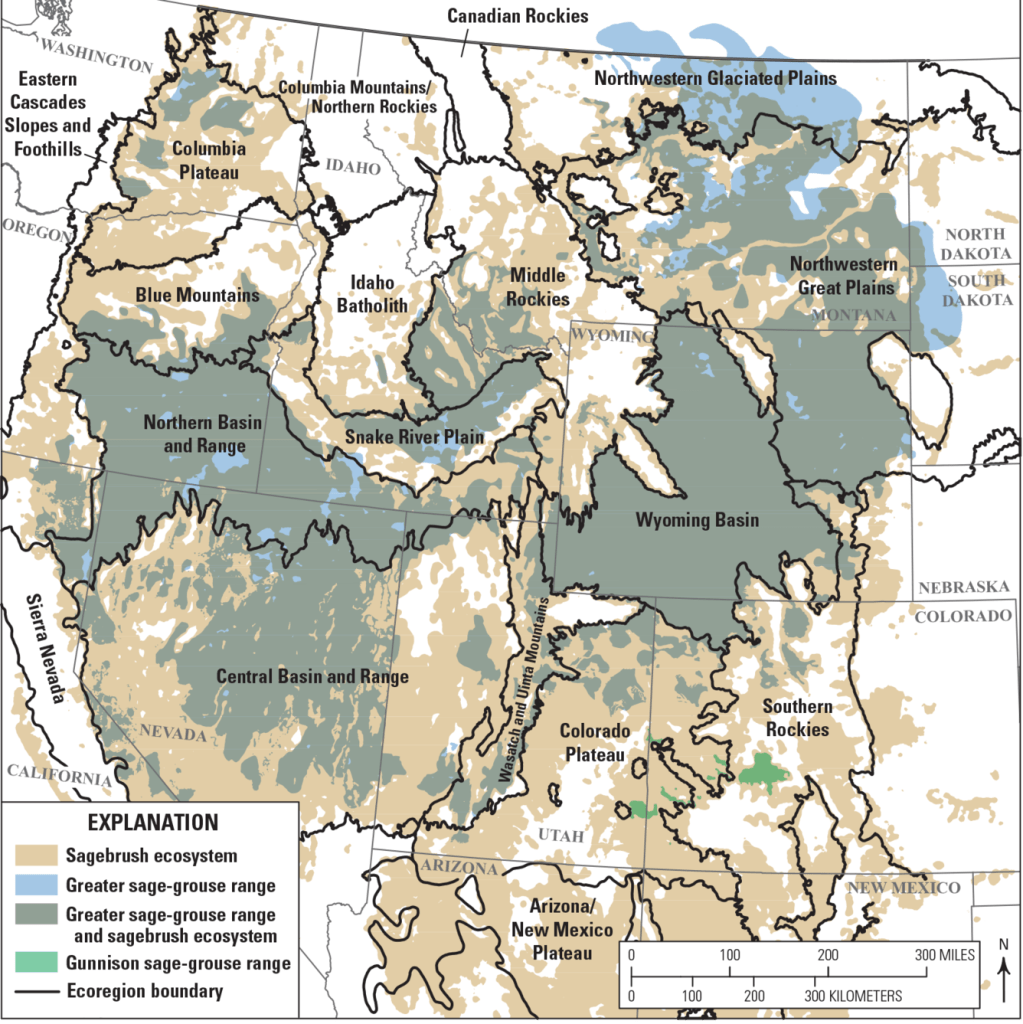
The Sagebrush Steppe is a vital and fragile ecosystem that covers 165 million acres of the United States and Canada1. This includes the majority of southern Idaho (my habitat!), but also huge swaths of the wester United States from the Rockies to the sea.
As one would expect, this ecosystem is built and maintained by big sagebrush, Artemisia tridentata, named for it’s trident-shaped leaves (three-toothed!) and either for the Greek goddess Artemis2 or, as I was taught, after the ancient Queen of Caria (Türkiye), Artemisia who was a noted botanist, medical researcher, and scholar. This large shrub regularly grows between 3 and 10 feet tall, with some individuals reaching 16 feet in ideal conditions.3
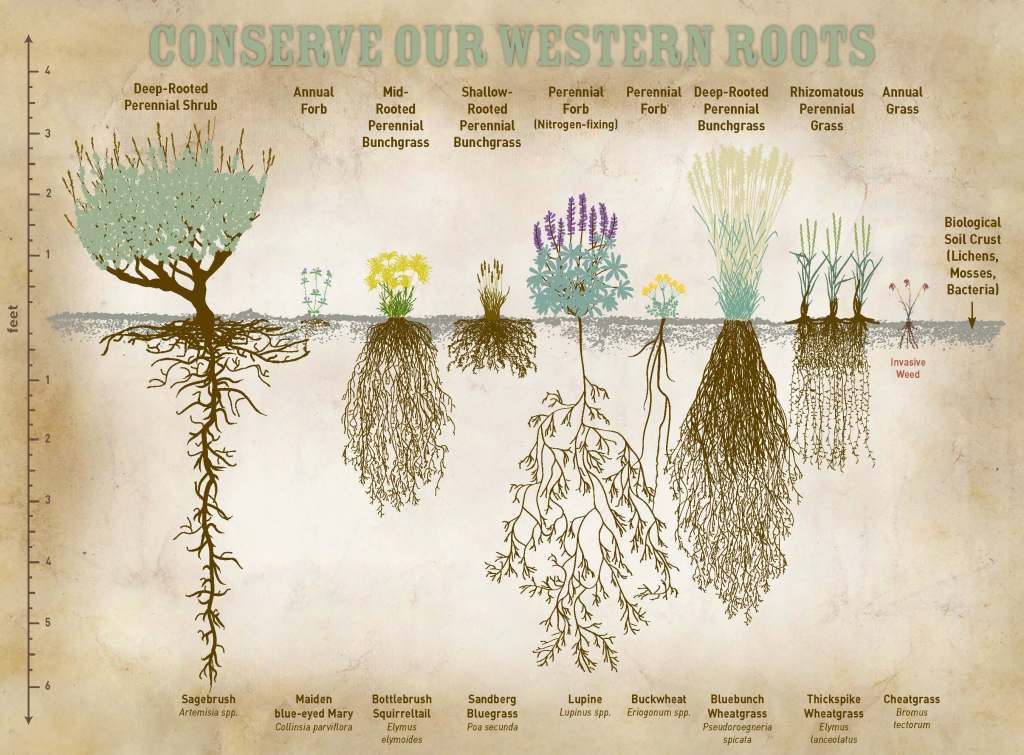
Sagebrush was evolved for this unique landscape. The soil here is sandy and the environment is arid. Sagebrush tackles those hurdles by having both a deep tap root that averages 6ft deep (up to 13 ft deep, in larger shrubs) and wide-spreading, shallow fibrous roots. This allows the sagebrush to hold onto the hillside, prevent erosion, and bring water up — creating moist soil around itself that other plants like forbs and flowers can use. Sagebrush benefit the entire landscape around them!